
















Room-by-room control, also known as individual room control, refers to the separate temperature control of each individual room, rather than a blanket control system for entire sections of a building or the building as a whole. Each room is assigned its own setpoints and time profiles. In non-residential buildings with rooms serving different purposes, this system forms the basis for directing heating energy precisely where it is needed. This allows operation to be tailored precisely to the use of the respective room, rather than heating the entire building uniformly.
What is room-by-room control?
With room-by-room control, each room is regulated separately, with its own set temperature and its own schedule. This means that a conference room can be managed differently from a permanently occupied office or a rarely used storeroom. Technically, this requires each radiator to have its own controllable actuator and for the rooms to be registered in the central platform. It is only this room-specific addressing that allows rules to be defined separately for each room, rather than for the entire building.
How does individual room control save energy?
Rooms that are not currently in use are specifically cooled down, while occupied rooms maintain their comfort temperature. As the whole building is no longer heated across the board, energy consumption falls noticeably, particularly where usage is irregular.
The rules can be combined according to building type: hotels, linked to their booking systems, heat on an occupancy-based basis; schools and office buildings operate with fixed occupancy times; whereas hospitals and care homes, which are continuously occupied, primarily use profiles based on the time of day and the temperature reduction of individual unused areas.
Where is room-by-room control particularly useful?
It is particularly effective in buildings with highly variable or mixed occupancy levels. These include:
- Hotels with fluctuating occupancy rates and vacant rooms
- Schools and educational institutions with fixed timetables and holiday periods
- Office buildings with a proportion of staff working from home and meeting rooms used for varying purposes
- Administrative buildings with peak and off-peak visiting hours
- Hospitals and care homes, where individual areas are only used at certain times and the comfort of residents must be ensured
In all these cases, there is a significant difference between occupied and unoccupied rooms, and it is precisely this difference that room-by-room control capitalises on. The more variable the occupancy, the greater the potential savings compared with a standardised building control system.
What is the difference between individual room control and centralised building control?
A central building control system regulates the heating for the entire building or for large sections uniformly, for example via a common flow temperature. It cannot take into account the fact that individual rooms are used differently.
Individual room-by-room control operates at a more granular level and regulates each room separately. The practical difference becomes apparent in everyday life: in a centrally controlled building, if a room is empty, it is still heated. With individual room control, the temperature in that specific room is reduced, whilst the occupied rooms remain unaffected. The two approaches are not mutually exclusive. Individual room control often complements an existing centralised system and delivers additional savings without the need to replace the basic installation.
What technology is required for room-by-room control?
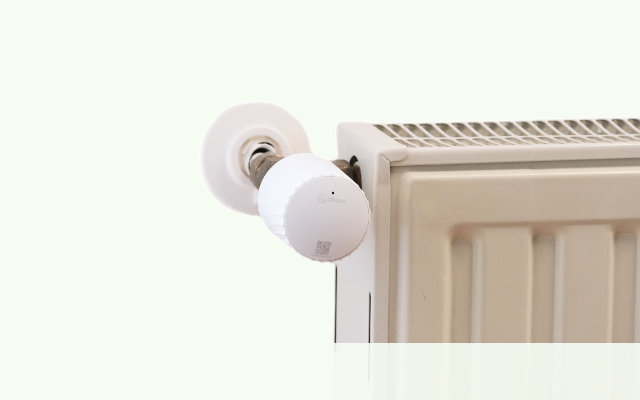
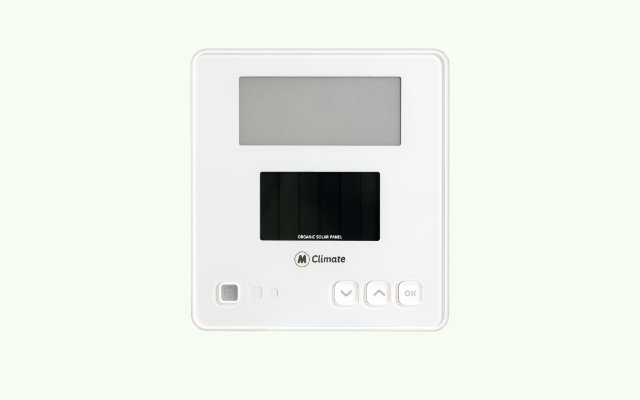
The basis of any individual room control system is the ability to monitor and control each room separately. This requires a controllable actuator on each radiator—usually an electronic thermostat head—and, depending on the application, additional sensors such as temperature sensors (which are usually also built into the thermostat) or window contacts.
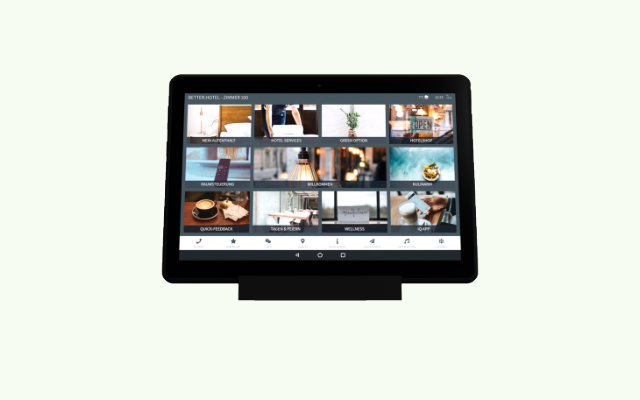
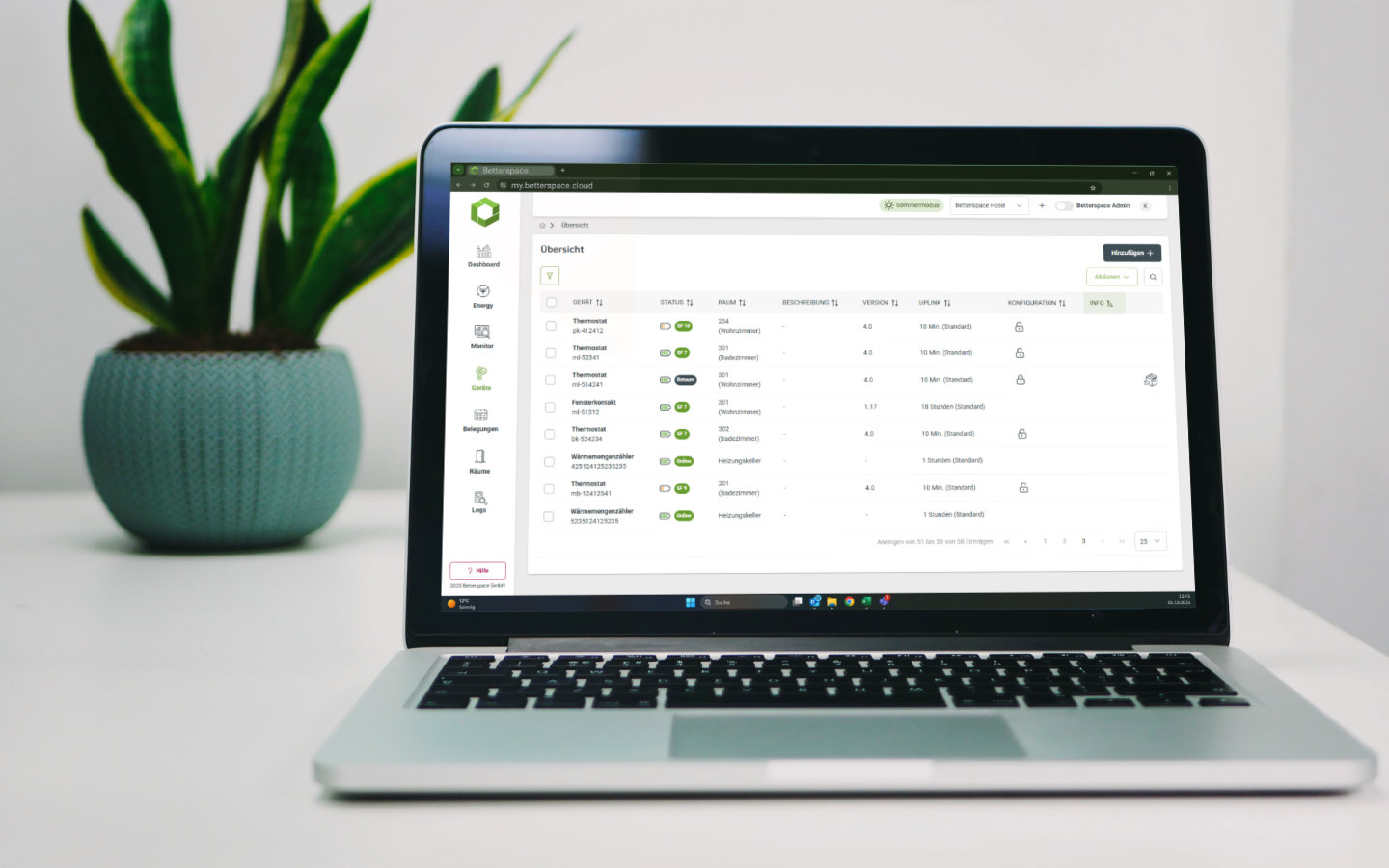
These devices report their readings to a central platform and receive their control commands from there. In wireless systems, a gateway handles the connection between the devices and the platform, eliminating the need for extensive wiring. On the platform, rooms are set up, assigned setpoints and time profiles, and grouped into control sets. It is precisely this room-specific configuration that distinguishes individual room control from blanket control and makes it relatively easy to retrofit in existing buildings.
Related terms
Sources and further information
- Betterspace: MSR-Technik in Nichtwohngebäuden: Wie du mit smarter Steuerung Energie und Kosten sparst
- Betterspace: Energiemanagement in Bestandsgebäuden nachrüsten
- Deutsche Energie-Agentur (dena): KEDi-Dossier zur verpflichtenden Gebäudeautomation nach § 71a GEG