


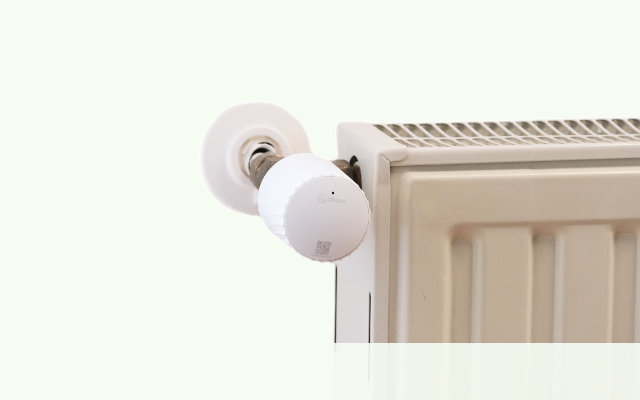
















Radiator control refers to the automated regulation of individual radiators via electronic thermostatic heads, which open and close the valve depending on the set temperature, time profile, or occupancy. It replaces manual operation at the radiator and enables room-by-room, centrally managed control of heat output. In non-residential buildings, it is one of the most effective ways of saving heating energy, as it automatically reduces the temperature in unoccupied rooms.
What is radiator control?
Radiator control is the automatic regulation of heat output from individual radiators. Instead of manually adjusting the thermostat, the temperature follows a programmed setpoint or schedule that is managed centrally. This allows operation to be adapted to the actual use of a room without the need for on-site staff to intervene. In non-residential buildings with many rooms, this is essential for using heating energy in a targeted manner rather than across the board.
How does an automatic radiator control work?
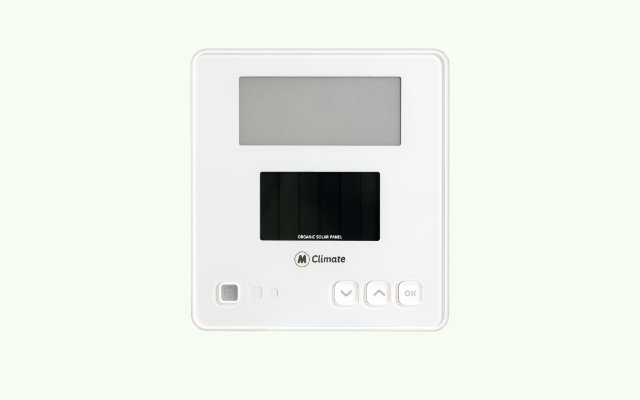
Electronic thermostatic heads replace the traditional valve heads on radiators. They measure the temperature, receive control commands from a central platform – often wirelessly via LoRaWAN – and adjust the valve accordingly. Additional signals, such as window contacts or occupancy data, are factored into the control system. Through a connection to a booking or management system, the control system can also determine which rooms are in use. The actual logic lies in the rules and algorithms that decide when, which room, and to what temperature should be heated.
What algorithms does a smart radiator control use?
Typical rules and automatic functions include, for example:
- Day and night temperature reduction at set times
- Temperature reduction in unused rooms based on occupancy data or timetables
- Automatic response to open windows, via window contacts or a detected drop in temperature
- Upper and lower temperature limits to ensure rooms neither overheat nor become too cold
- Pre-heating before the usual time of use to ensure the room is warm in good time
How much energy does a radiator control system save?
The potential for savings depends on the building and its use and is greatest where occupancy is irregular, as the temperature in unused rooms is automatically reduced. According to Betterspace, energy savings of up to 35 percent can be achieved, depending on the sector. In non-residential buildings, figures of up to around 31 percent are often cited. Two measurements carried out in hotels under the supervision of the Fraunhofer Institute IEE confirmed savings of around 26 and 28 percent. However, the figure can only be reliably determined in individual cases following prior energy monitoring to document the baseline consumption.
What sort of buildings is a radiator control suitable for?
Radiator control systems are most effective in buildings with many individually heated rooms and varying patterns of use. These include hotels, schools, office and administrative buildings, as well as care homes and clinics. In all these settings, rooms are regularly left empty or are only used at certain times, meaning that automatic temperature reduction pays off immediately. A prerequisite is that heat is supplied via radiators, as the control system operates directly on their valves. If fan coil units are used instead, the approach is the same, but the technical complexity of the control system is greater.
What is the difference between a radiator control system and a room-by-room control system?
The two terms are often used interchangeably, but they do not mean the same thing. Radiator control describes the technical implementation at the individual radiators, i.e., the automatic adjustment of the valves via electronic thermostatic heads. Individual room control is the overarching principle of regulating each room separately. In practice, radiator control is often the means by which individual room control becomes possible in the first place, as it allows heat output to be adjusted precisely for each room. Where heat is supplied not via radiators but via other systems, the same principle applies using different technology. The benefit remains the same in both cases: namely, to provide heat only where it is actually needed.
Related terms
Sources and further information
- Betterspace: Messstudien belegen die Wirkung von better.energy
- Betterspace: better.energy
- Betterspace: Kosten-Nutzen-Vergleich im Hotel
- Betterspace: Energieeinsparungen im Hotel
- Betterspace: Smartes Heizen im Hotel senkt den Energieverbrauch
- Deutsche Energie-Agentur (dena) KEDi-Dossier zur verpflichtenden Gebäudeautomation nach § 71a GEG