















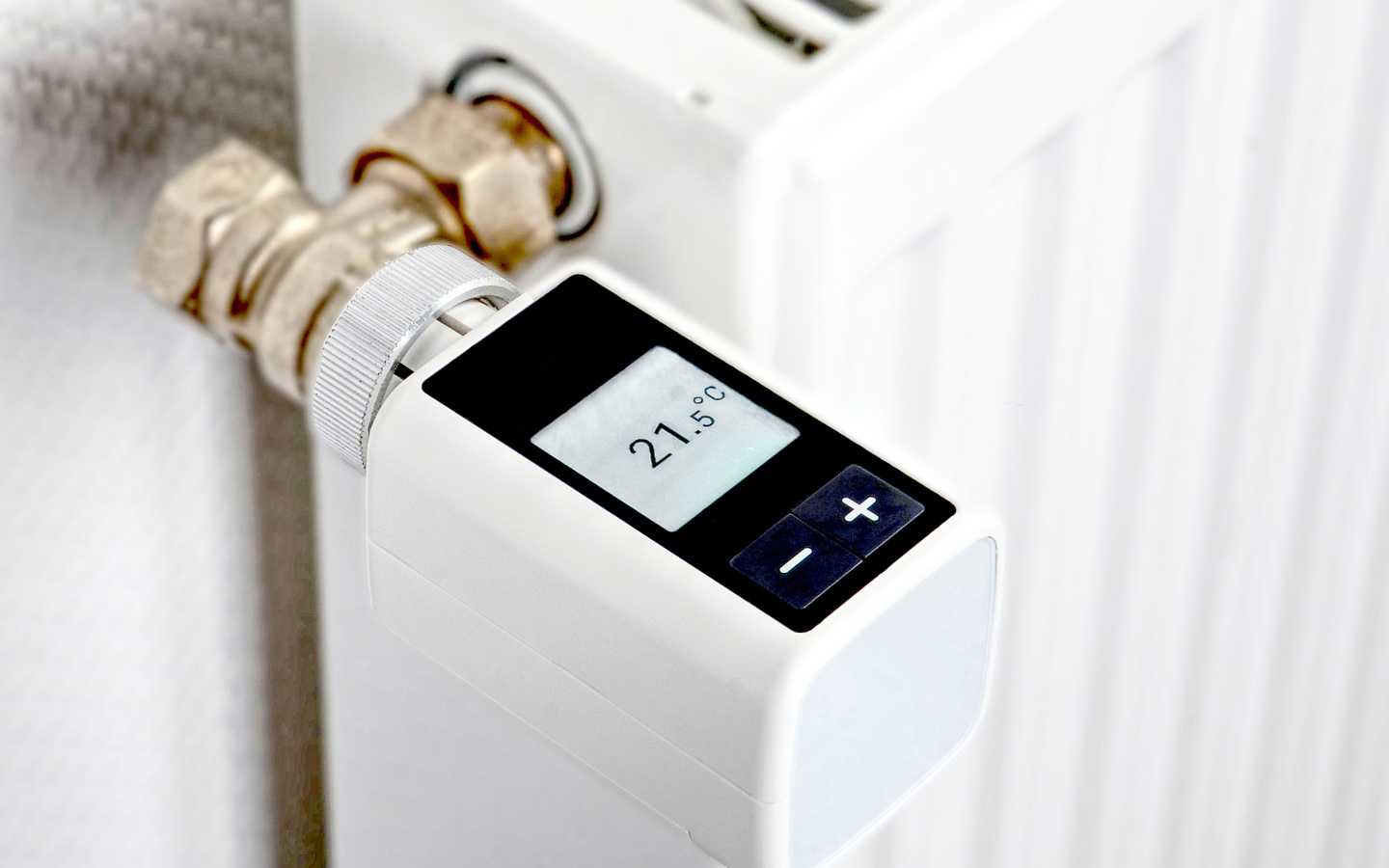
Digital thermostats, also known as electric or smart thermostats, are electronic temperature controllers that measure the room or radiator temperature and automatically control the heating valve according to a pre-set target value or time profile. Unlike mechanical thermostats, they can be programmed, configured remotely, and integrated into a central platform. As a result, the digital thermostat is often the first component used to retrofit an existing building for automated heating control.
What are digital thermostats?
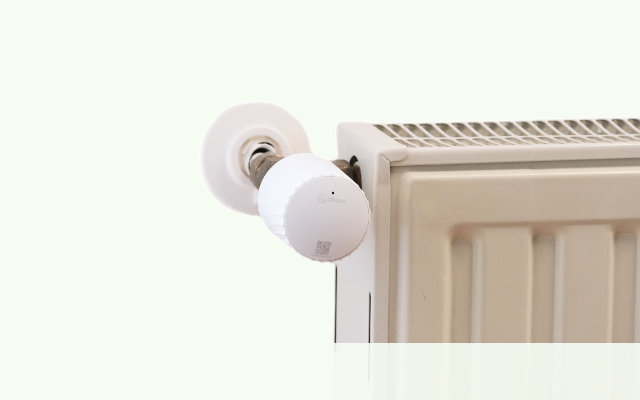
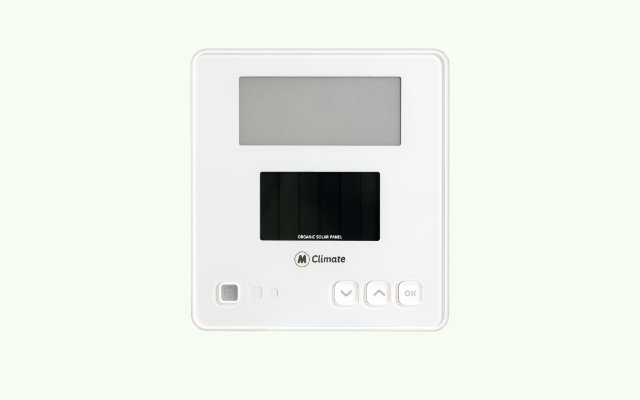
Digital thermostats are electronic controls fitted to radiators or on the wall that not only maintain the temperature but also allow it to be programmed. Depending on the type of thermostat, they recognise setpoints and timetables and can be grouped together so that entire floors or areas of use can be controlled collectively. Unlike a simple controller fitted to the appliance, they process additional information, such as whether a window is open or whether a room is in use according to the occupancy schedule. In networked systems, they act as both sensors and actuators: they measure the temperature and adjust the valve.
How do digital thermostats differ from mechanical ones?
A mechanical thermostat regulates the temperature solely via a bimetallic strip and must be set on the device itself. A digital thermostat takes readings electronically, follows programmed time profiles and can be configured remotely. In wireless systems, it transmits its readings wirelessly and receives control commands, for example via LoRaWAN. The following overview categorises the common types:
| Design | Operation | Remote control | Typical use |
| Mechanical thermostat | Manually on the unit | No | Individual rooms without automation |
| Digital thermostat (locally programmable) | On the unit or via an app | Limited | Individual rooms with a time profile |
| Digital wireless thermostat (networked) | Centrally via a platform/software | Yes | Buildings with many rooms and centralised control |
Why are digital thermostats worth installing in non-residential buildings?
In non-residential buildings, usage varies greatly, with many rooms standing empty at times. Digital thermostats automatically lower the temperatures in these rooms and only heat them to a comfortable temperature when they are actually in use. This reduces energy consumption without staff having to adjust valves manually.
The effect is significant. For every degree the temperature is lowered, around five to eight per cent of heating energy can be saved, and across the entire building, savings well into double figures are possible, depending on the sector and usage. As the thermostats can be replaced without any structural alterations, retrofitting is simple and practical even in existing and listed buildings.
What are the requirements for using digital thermostats?
To use digital thermostats, the thermostat head must be compatible with the valve on the radiator; adapters are available for the most common valve types. In a networked system, a wireless connection is also required – for example, via LoRaWAN – as well as a gateway that aggregates the signals and forwards them to the central platform. The actual replacement of the thermostat head takes just a few minutes per radiator and requires no structural alterations, meaning that even buildings with many rooms can be retrofitted within a reasonable timeframe. With fan coil units rather than traditional radiators, the effort involved is greater, as an electrician usually has to handle the control system in such cases.
How are digital thermostats managed centrally?
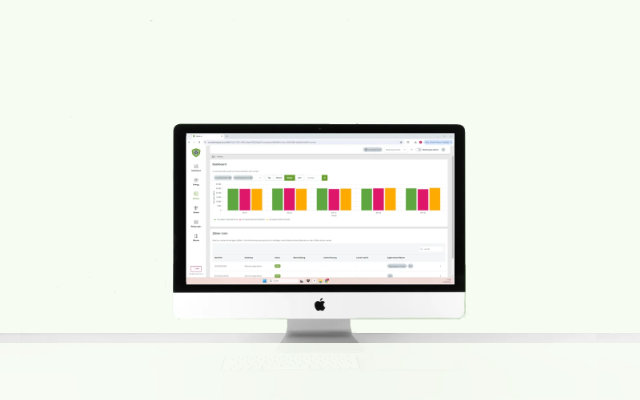
In a networked system, thermostats are no longer set individually on each unit but are managed via a central platform. Here, setpoints and time profiles can be stored for individual rooms, entire floors or usage groups and, if required, changed for many units simultaneously in just a few simple steps. In buildings with many rooms, this saves a considerable amount of effort, as no one needs to go from radiator to radiator anymore, whilst also ensuring that the settings remain consistent and traceable. It also enables analyses, such as identifying which rooms are consistently overheated.
Related terms
Sources and further information
- Betterspace: Smartes Heizen im Hotel senkt den Energieverbrauch
- Betterspace: Behördenthermostate: Wie viel Energie sparen smarte Modelle?
- Betterspace: Energiemanagement in Bestandsgebäuden nachrüsten
- Betterspace: Smarte Heizkörperthermostate für große Gebäude: batteriebetrieben oder kabelgebunden?
- Verbraucherzentrale: Hinweise zu programmierbaren Thermostaten