


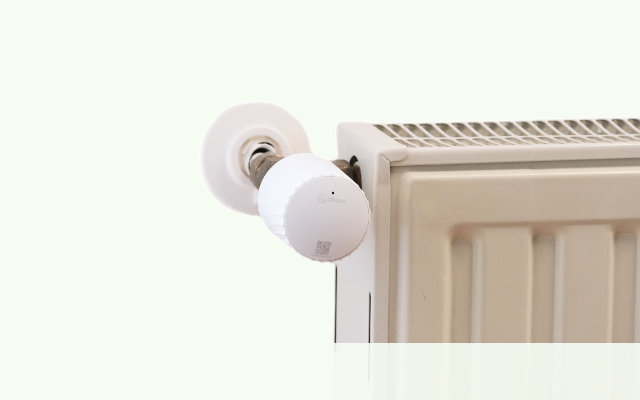
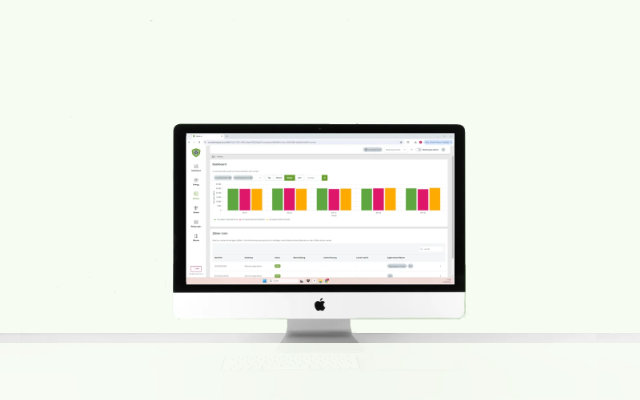

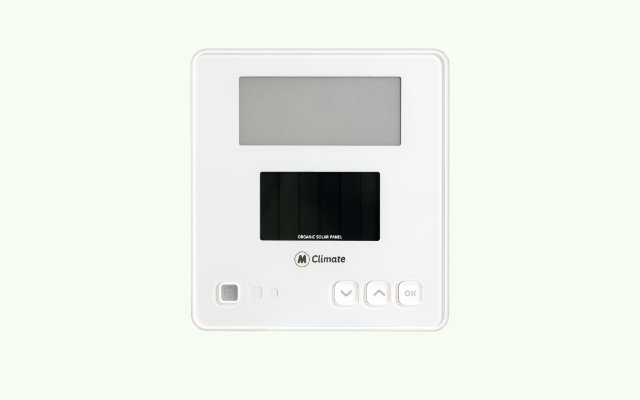








LoRaWAN stands for Long Range Wide Area Network and is a wireless protocol for energy-efficient data transmission over long distances. It transmits small amounts of data very efficiently in terms of power consumption and penetrates building structures better than conventional Wi-Fi, which is why it has become established for networking sensors and actuators within buildings. This allows buildings to be fitted with sensor technology without the need for complex cabling, even in existing buildings.
What is LoRaWAN?
LoRaWAN is a wireless standard designed specifically for connected devices that are intended to transmit small amounts of data infrequently whilst consuming as little power as possible. The name reflects its long range and wide-area network architecture. The standard uses a spread-spectrum technique, which enables a robust connection even in places where walls and obstacles would otherwise weaken a normal radio signal.
How does LoRaWAN work?
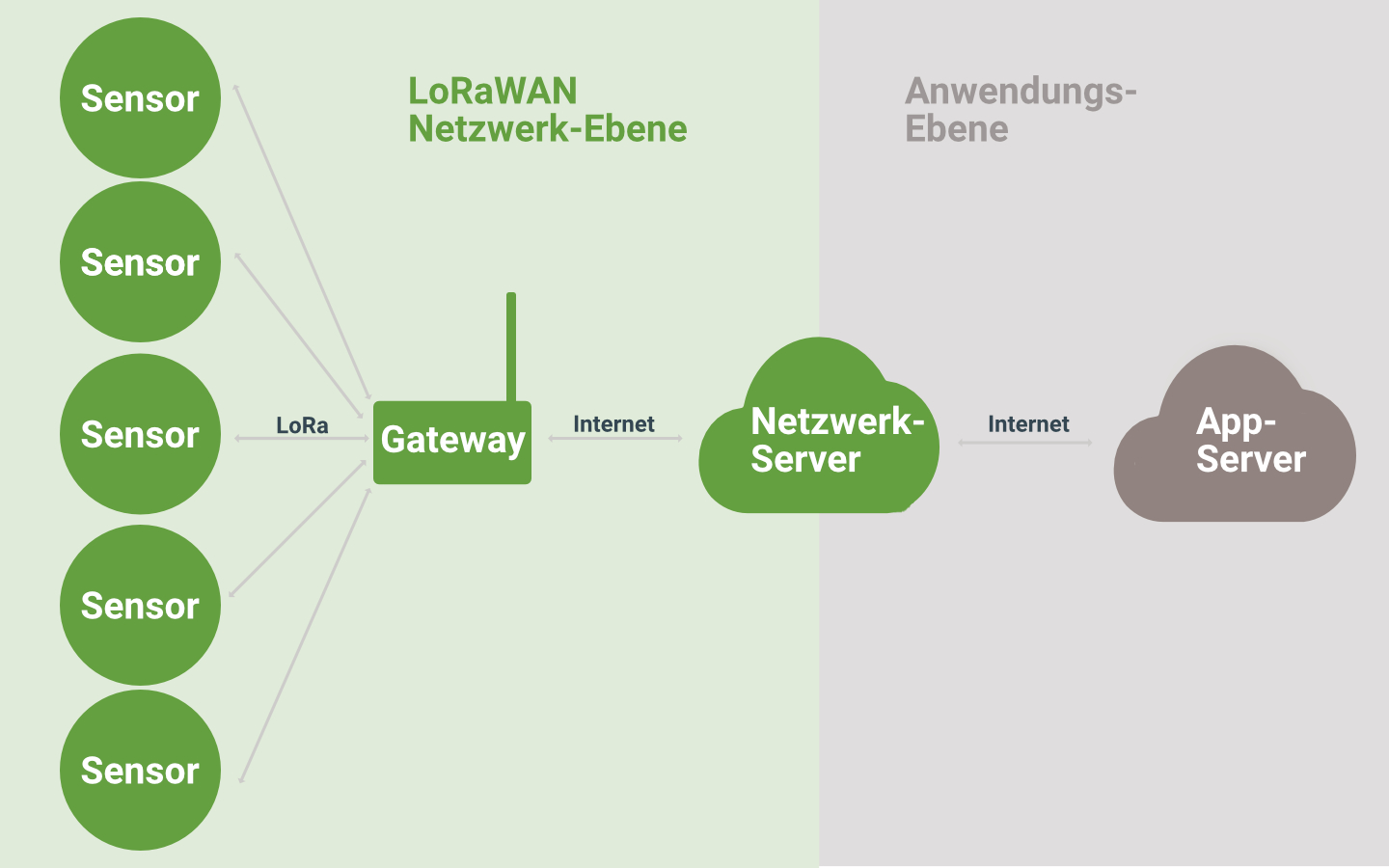
The modern wireless network consists of three layers: end devices such as sensors and actuators transmit their data wirelessly to a gateway. The gateway aggregates the signals and forwards them via the internet to a network server, which makes the data available to the central application. Control commands travel in the opposite direction. Because only small data packets are transmitted in short bursts and the devices switch to a sleep mode in between, battery-powered sensors often operate for several years without needing their batteries replaced. The data is encrypted end-to-end.
How does LoRaWAN differ from Wi-Fi and wired systems?
The three approaches differ significantly in terms of range, energy consumption and installation effort:
| Feature | LoRaWAN | Wi-Fi | Wired building management system |
| Range within the building | High, good penetration | Limited | Depends on cabling |
| Device power consumption | Very low | High | Depends on the network |
| Installation effort | Can be retrofitted without cabling | Existing network required | Complex cabling |
| Suitability for existing buildings | High | Medium | Low |
Why is this wireless standard suitable for building automation?
This modern wireless network requires only a few gateways, penetrates walls and ceilings effectively and, if desired, operates independently of the operator’s IT network. This makes retrofitting straightforward, as it requires neither extensive cabling nor any intervention in the existing IT infrastructure. The technology really comes into its own in older or listed buildings, where it is virtually impossible to lay cables. At the same time, it is scalable, meaning that a system can be expanded from just a few rooms to cover multiple sites.
How secure is data transmission via LoRaWAN?
The wireless standard transmits data using end-to-end encryption, separating two security layers: one for the network and one for the application. Both typically operate on the basis of the AES standard, which is also widely used in other security-critical applications. An additional advantage is that a LoRaWAN system can be operated independently of the operator’s IT network, for example via the gateway’s own mobile network connection. This means that no new attack surface is created within the existing corporate network, and the IT department does not need to integrate the system into its infrastructure.
How many devices does a LoRaWAN network support?
A single gateway can serve many end devices simultaneously, meaning that an entire building can be covered with just a few gateways. According to Betterspace, a single gateway has an indoor range of up to 500 metres, although the actual range depends on the building’s structure. As the end devices only send short data packets and switch to standby mode in between, battery-powered sensors often operate for several years without needing replacement. The system remains scalable, from just a few rooms in a single property to many devices across multiple sites.
Related terms
Quellen & weiterführende Informationen:
- Betterspace: Mit LoRaWAN zum Smart Building
- Betterspace: Was ist LoRaWAN und wie funktioniert es
- Betterspace: MSR-Technik und wie sie Energie spart
- Betterspace: better.energy at a glance
- Betterspace: GA, GLT und LoRaWAN-Raumsteuerung im Vergleich
- LoRa Alliance: What is LoRaWAN®?