





















HVAC stands for heating, ventilation, and air conditioning, and encompasses the building services that ensure indoor climate and thermal comfort. These systems are part of a building’s technical infrastructure and account for a large portion of the energy consumption in the operation of a non-residential building, which is why controlling them is key to energy efficiency.
What does HVAC stand for?
HVAC is the abbreviation for heating, ventilation, and air conditioning. The term describes the entirety of the technical systems in a building that are responsible for heat, fresh air, and a comfortable indoor climate.
What does HVAC technology include?
HVAC technology comprises several components that work together:
- Heat generators and radiators for heating
- Ventilation systems, often with heat recovery
- Air conditioning and cooling units such as fan coils
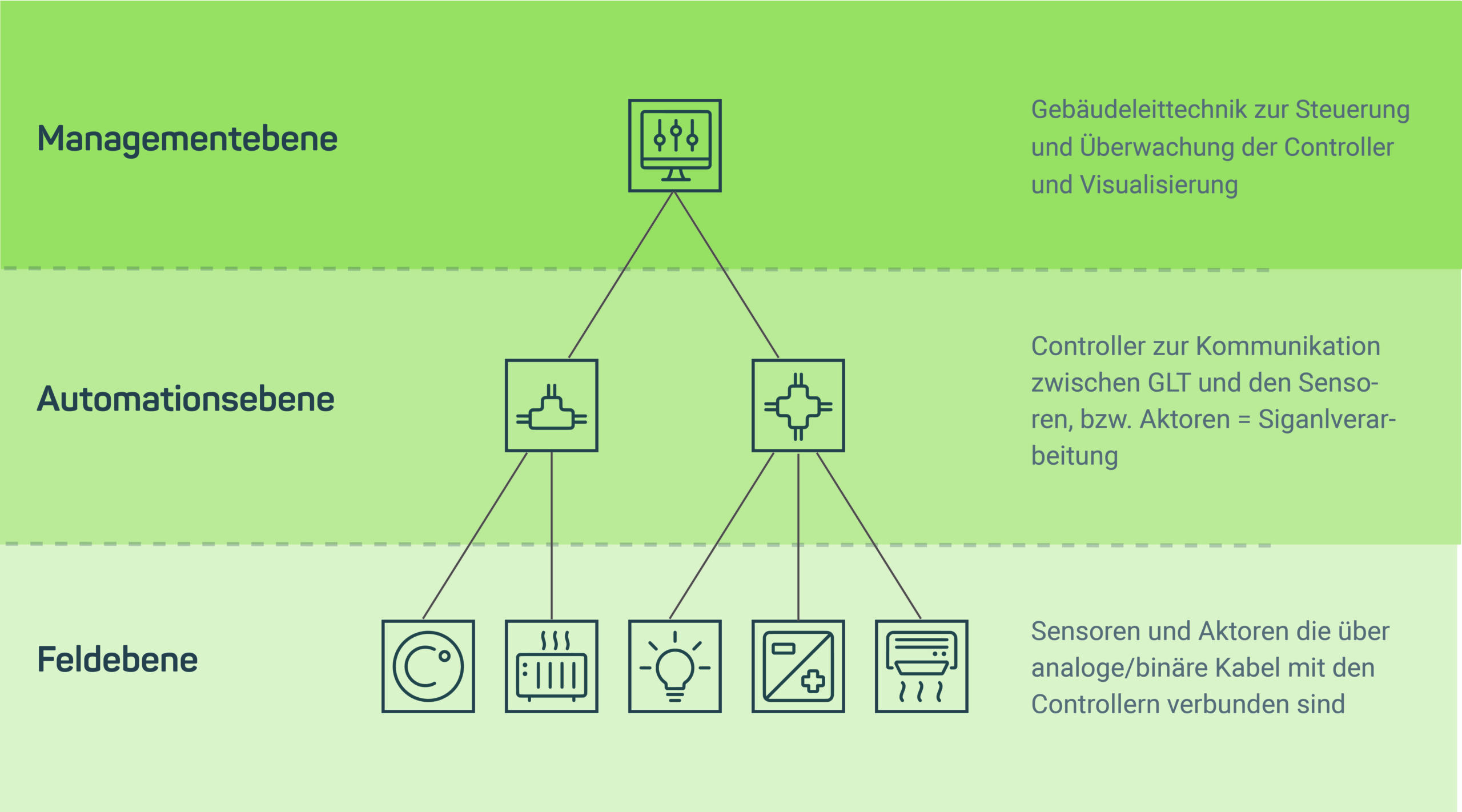
- The associated measurement, control, and regulation technology that coordinates these systems
Together, these systems account for the largest share of energy consumption in a building’s operation.
Why is HVAC control crucial for energy efficiency?
In non-residential buildings, HVAC systems are among the largest consumers of energy. How efficiently a building is operated therefore depends heavily on how well the heating, ventilation, and air conditioning systems are coordinated with one another and adapted to actual usage. This is exactly where automation comes in: A control system that maintains room temperatures according to demand and lowers temperatures in unused areas unlocks savings potential that would otherwise remain untapped with manual operation.
Traditionally, this task is handled by complex, wired building management systems. In existing buildings, wireless solutions are often the more practical alternative. The reason lies in the effort involved: A wired building management system requires extensive installation work, which is expensive and disruptive in an occupied building. Wireless systems, on the other hand, can be retrofitted while the building is in operation without having to open walls or lay cables.
For many existing buildings, this is the decisive factor, because it allows efficiency gains to be achieved without structural intervention and with manageable effort. Ultimately, however, the key to success is not the transmission technology itself, but how well the control system is adapted to the building’s actual usage.
Related terms
Sources and further information
- Betterspace: GA, GLT und LoRaWAN-Raumsteuerung im Vergleich
- Verein Deutscher Ingenieure (VDI): VDI standards