


















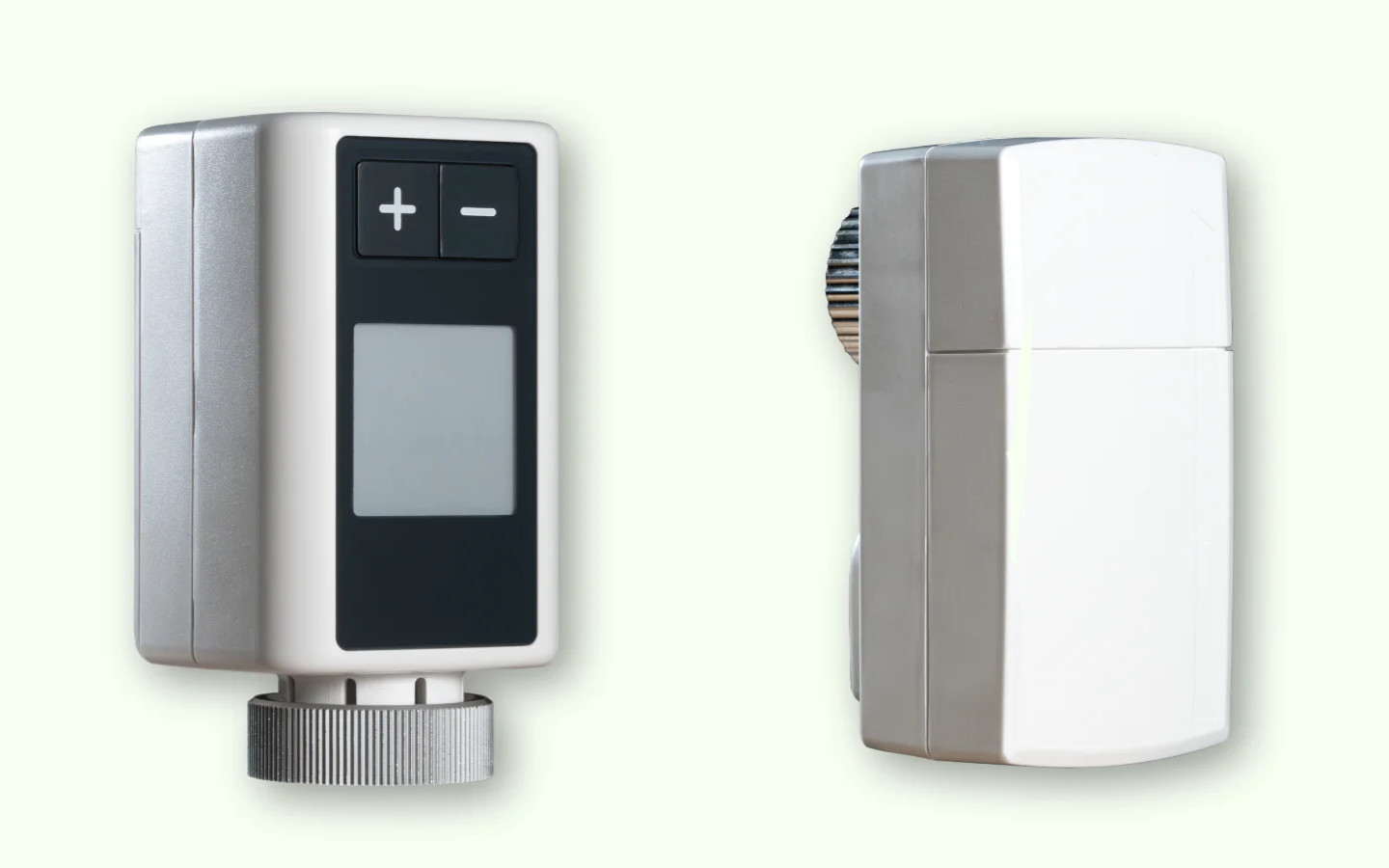
An actuator is a component that converts an electrical control signal into a physical action, such as opening or closing a heating valve. It is the executive counterpart to the sensor, which merely measures conditions. In building automation, sensors and actuators together form what is known as the field level – that is, the layer at which a system monitors and actively influences the real-world environment.
What is an actuator?
An actuator converts a control signal into a mechanical, thermal or electrical effect. It is always the component that implements a decision made by the control system in the physical world. Common types include electrical actuators such as actuators and valves, mechanical actuators such as motors, and switching actuators that switch devices on and off.
Without actuators, any control system would be ineffective, because although the data from the sensors would be analysed, it would not be translated into actions. In addition to electric actuators, there are also thermal, pneumatic or hydraulic actuators, depending on the application. In heating and building services engineering, electrically operated actuators are the most common, as they can be controlled precisely and require little maintenance during operation.
How does an actuator work in a heating control system?
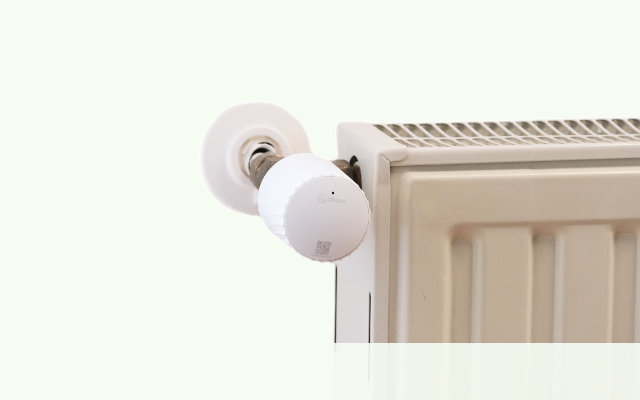
In heating control systems, the electronic thermostatic head is the typical actuator. It receives a setpoint from the control system, then adjusts the valve stroke on the radiator, thereby regulating the flow of heating water. If less hot water flows through the radiator, the heat output decreases, and vice versa. In this way, the room temperature can be automatically adjusted to a time profile or to the actual occupancy without any manual intervention. In wireless systems, the actuator receives its commands wirelessly, for example via LoRaWAN.
What is the difference between an actuator and a sensor?
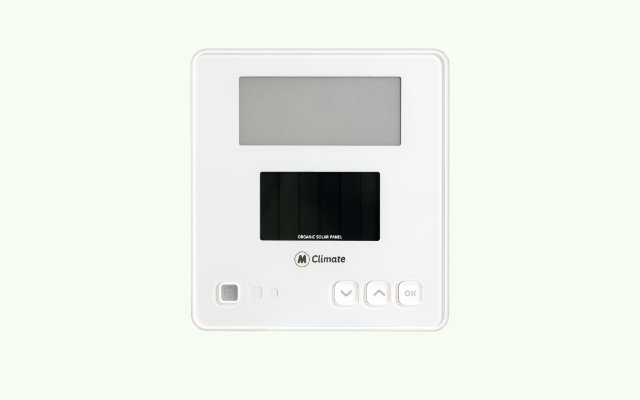
A sensor measures a parameter such as temperature or window position and provides data. An actuator actively intervenes in the process and alters it. Both work together within a control system: the sensor provides the basis for the decision, whilst the actuator implements it. In practice, both components are often housed within a single device, such as a temperature sensor and a valve actuator fitted to a digital thermostat mounted on a radiator, which together complete the control loop.
Related terms
Sources and further information
- Betterspace: MSR-Technik und wie sie Energie spart
- Betterspace: Energiemanagement in Bestandsgebäuden nachrüsten
- Wikipedia: Actuator