




















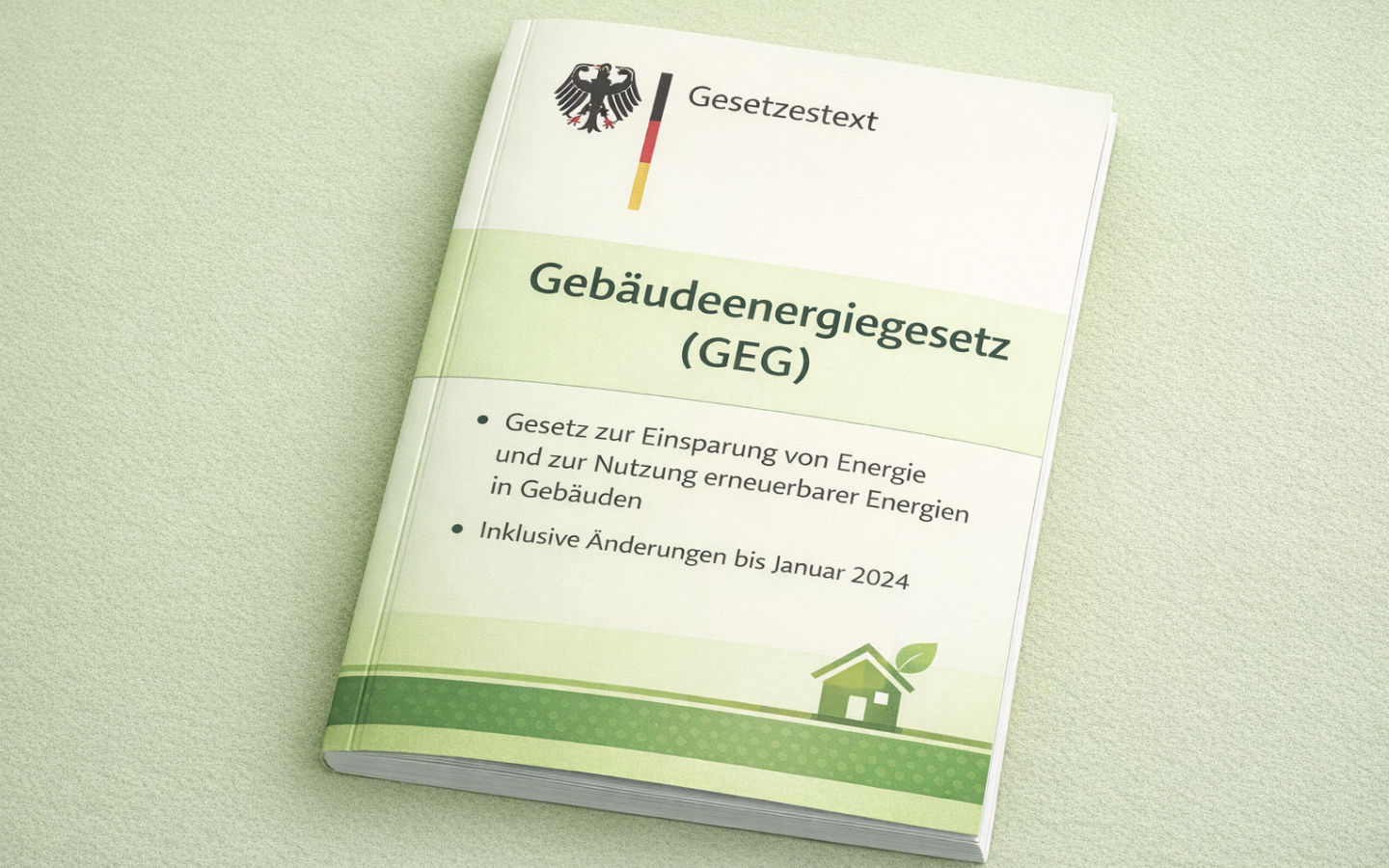
The Buildings Energy Act (Gebäudeenergiegesetz, GEG), colloquially known as the Heating Act (Heizungsgesetz), was Germany’s central law governing the energy-related requirements for buildings and heating systems. It came into force on 1 November 2020. Among other things, it set minimum energy efficiency requirements for new builds and existing buildings and, under Section 71a, established the obligation to implement building automation for larger non-residential buildings. Following a resolution by the Bundesrat and Bundestag on 10 July 2026, it is being replaced by the Buildings Modernisation Act (Gebäudemodernisierungsgesetz, GModG).
What was the Buildings Energy Act?
The GEG was a federal law setting minimum energy-related requirements for new builds, existing buildings, and heating systems. It brought together three previously separate sets of regulations: the Energy Saving Ordinance (Energieeinsparverordnung), the Energy Saving Act (Energieeinsparungsgesetz), and the Renewable Energies Heat Act (Erneuerbare-Energien-Wärmegesetz). The 2024 amendment added the much-discussed requirement that new heating systems had to run largely on renewable energy.
What does Section 71a GEG require for non-residential buildings?
Section 71a was particularly relevant for operators of non-residential buildings. It obliges non-residential buildings with heating or air conditioning systems of more than 290 kW rated output to be equipped with a building automation and control system. The deadline for this ran until the end of 2024. Where a building has several systems, the 290 kW threshold applies to their combined output. The EU Buildings Directive also provides for this threshold to be lowered to 70 kW in the coming years, meaning significantly more buildings will be affected.
Was the GEG abolished?
The Buildings Energy Act was not scrapped outright but replaced by the Buildings Modernisation Act. The GModG removes the blanket requirement for a renewable energy share and instead places greater emphasis on technology neutrality. Many of the GEG’s core structures, including the underlying principles on building automation in larger non-residential buildings, were carried over into the new law.
Anyone dealing with current specific obligations should therefore look to the text of the GModG and its staged rollout. Measures already implemented retain their value. For example, anyone who installed a building automation system under the previous automation requirement also meets the corresponding requirements of the successor legislation, since these are continued in substance. In practice, then, it is less the name of the law that matters than whether the building’s technical equipment meets the required standard.
Related terms
Sources and further information
- Betterspace: Gebäudeautomation für Unternehmen, Pflicht oder Kür
- Betterspace: Regulatorik, ESG und Resilienz für Betreiber
- Deutsche Energie-Agentur (dena): KEDi-Dossier zur verpflichtenden Gebäudeautomation nach § 71a GEG
- geg-info.de: § 71a GEG Gebäudeautomation
- Klimaschutz- und Energieagentur Niedersachsen: Verpflichtung zur Gebäudeautomation (§ 71a GEG)