

















A decarbonisation pathway describes the rate at which the greenhouse gas emissions of a company, a property portfolio or an individual building must decrease year on year in order to achieve a specified climate target, such as limiting global warming to 1.5 degrees. It is usually depicted as a downward curve showing the permissible emissions per square metre per year up to the target year. It thus serves as a benchmark against which actual progress must be measured.
What is a decarbonisation pathway?
In common parlance, the term is used to encompass two distinct concepts that are best kept separate. The target pathway is an external benchmark: it specifies the maximum emission intensity that a building of a particular type in a particular country may have in any given year in order to be compatible with a climate target.
The action pathway, often referred to as a refurbishment roadmap or transformation plan, is, by contrast, the building’s own plan. What measures will a property owner implement, and in what order, to reduce their emissions so as to remain below the target pathway? Two key indicators are commonly used: emission intensity in kilograms of CO₂ equivalent per square metre per year, and energy intensity in kilowatt-hours per square metre per year.
How does the CRREM pathway work?
The most widely used target pathway in the property sector originates from the Carbon Risk Real Estate Monitor (CRREM) project. It was developed as an EU-funded research project led by the IRE|BS Centre of Excellence for Sustainability at the University of Regensburg and has been continued since 2023 by the non-profit CRREM Foundation.
CRREM derives scientifically grounded pathways from global climate targets, differentiated by country and property type, for example for offices, hotels or retail premises. If a building’s expected emissions trajectory is plotted against the relevant pathway, it becomes clear from which year onwards the building will exceed the target value. This point in time has long been referred to as the ‘stranding point’, because from then on the building is considered a ‘stranded asset’ – that is, a property at significant risk of losing value. The CRREM Foundation provides a free tool for this analysis.
How do operators develop their own decarbonisation pathway?
The first step is to establish a robust baseline. To do this, energy consumption figures for each building are recorded and converted into emissions using the emission factors for the respective energy sources. The more accurate this data is, the more reliable the pathway will be. Estimated figures or those based solely on annual meter readings provide little insight into where the greatest opportunities for action lie.
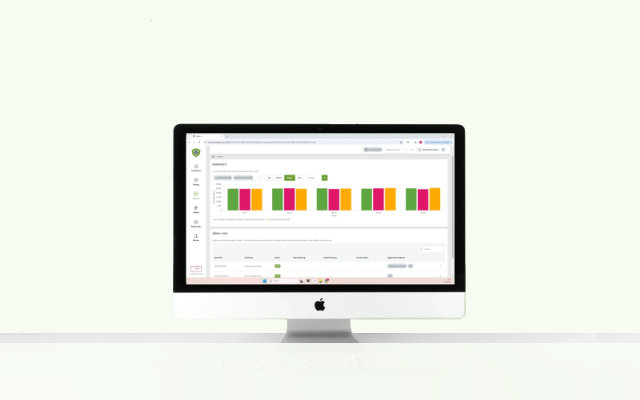
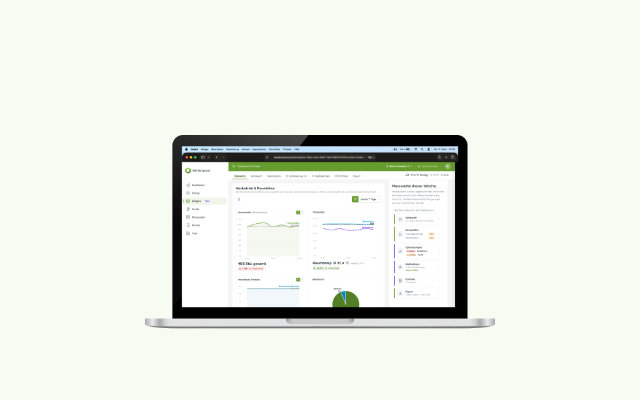
Next, a target scenario is selected, such as a CRREM pathway or the statutory target of greenhouse gas neutrality by 2045. This is followed by a sequence of measures. It makes sense to begin with low-cost operational measures, such as demand-based heating control or hydraulic balancing, as these have a rapid impact and reduce the need for later, more expensive investments in generation and the building envelope. Ultimately, regular monitoring is crucial: only by continuously measuring actual progress can one identify in good time whether a building is deviating from the pathway.
Related terms
Sources and further information
- Betterspace: Regulatorik, ESG und Resilienz für Betreiber
- Betterspace: better.energy radiator control
- CORDIS: Forschungsergebnisse der EU, Carbon Risk Real Estate Monitor
- CRREM Foundation: Pathways und Risk Assessment Tool