



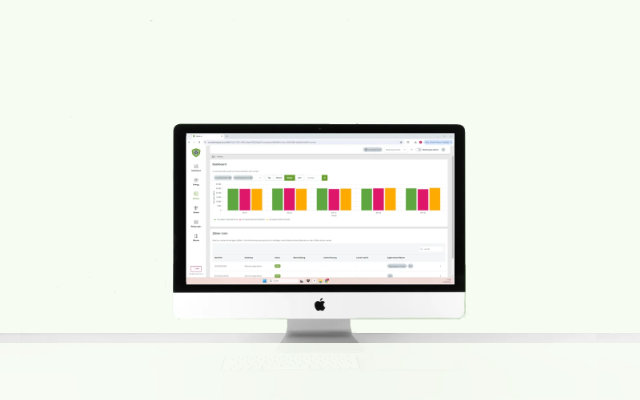

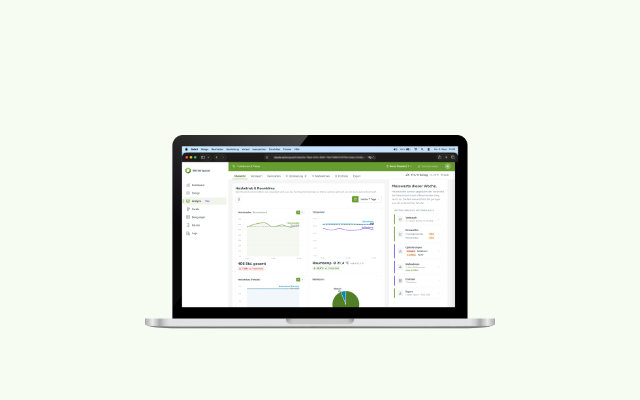














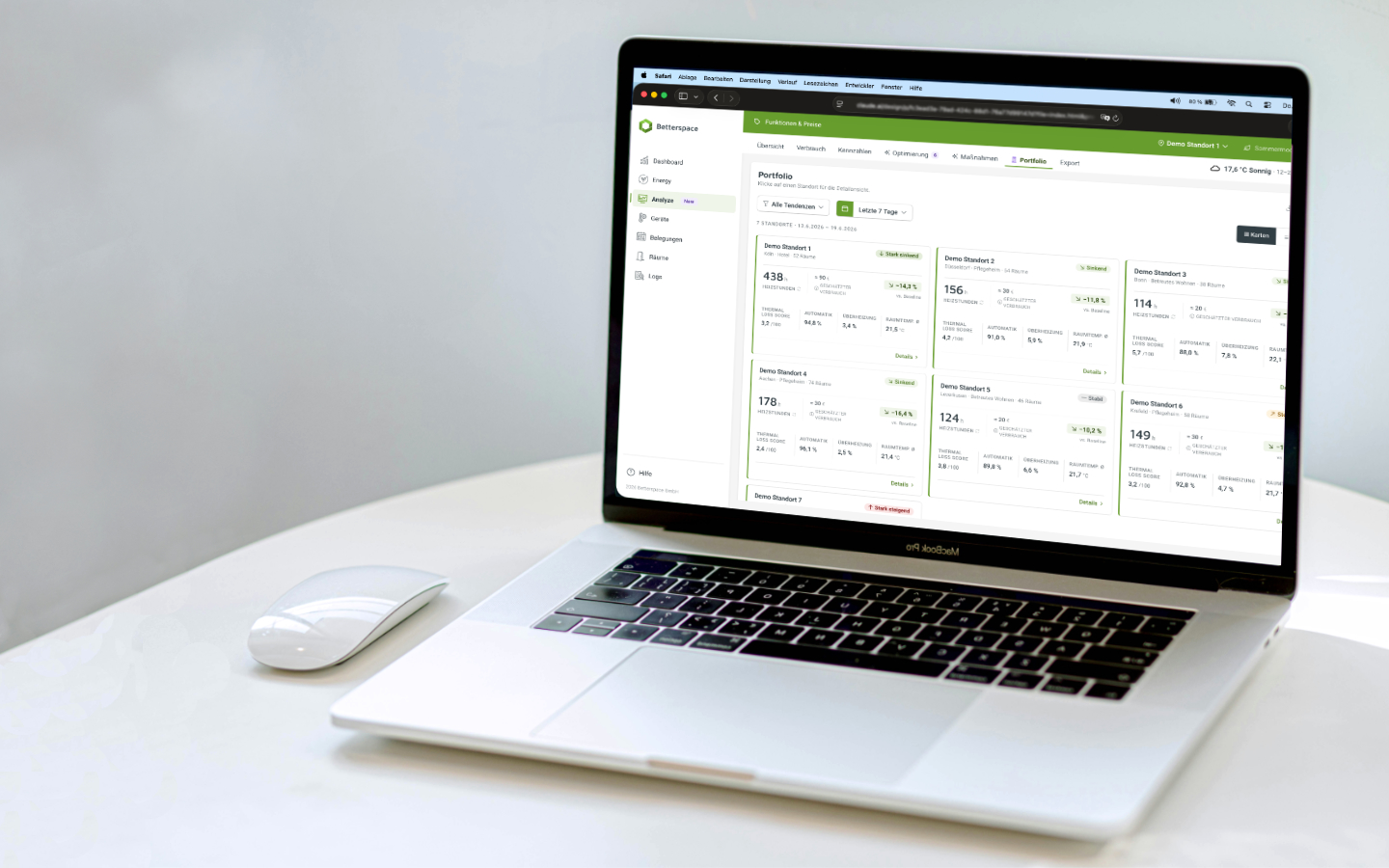
Business Intelligence, or BI for short, refers to the methods, processes and software that companies use to consolidate, process, analyse and present data from various sources in a clear and understandable way. The aim is to provide a robust basis for decision-making. Typical outputs include reports, key performance indicators and dashboards. In building management, BI helps to make energy, cost and operational data from multiple sites comparable and to identify discrepancies at an early stage.
What is Business Intelligence?
Business Intelligence is an umbrella term for everything that translates data into information relevant to decision-making. This includes the technical infrastructure – that is, databases and analysis tools – as well as the specialist question of which key performance indicators are actually meaningful for a company. BI focuses primarily on existing data: what has happened, where are the deviations, and how does a value develop over time? More advanced methods that generate forecasts or derive recommendations for action are often grouped under the term ‘Advanced Analytics’ and build upon a solid BI foundation.
How does Business Intelligence work in practice?
It all starts with data integration. Data from accounting systems, CRM, building management systems, meters or sensors is retrieved via interfaces, cleaned and converted into a standardised format. This step is often referred to as ETL, standing for Extract, Transform and Load. The processed data is stored in a central data repository, such as a data warehouse. This forms the basis for analysis and visualisation tools, which enable specialist departments to generate reports, filter key performance indicators and use dashboards without having to write code themselves. In practice, it is not so much the tool that determines success as the quality of the data: if values are missing, meters are incorrectly assigned or locations are named inconsistently, even the best dashboard will provide a distorted picture.
What role does BI play in energy and building management?
For operators of multiple buildings, BI is primarily a tool for comparability. When consumption data is analysed in relation to floor area, occupancy or outside temperature, it becomes clear which site requires a conspicuously high amount of heat and where a closer look is warranted. Combined with cost and occupancy data, this yields key performance indicators such as heat consumption per occupied room or per square metre, which can be utilised equally by senior management, financial control and facility management. A BI environment also provides the data foundation for sustainability reports and energy audits.
How do Business Intelligence and energy monitoring differ?
Energy monitoring continuously records consumption data and usually displays it in a specialised interface, often with high temporal resolution down to the room or plant level. Business Intelligence has a broader scope and links this energy data with other business data such as turnover, staff numbers or occupancy rates. The two are not mutually exclusive but complement each other: energy monitoring is an important source of data, whilst the BI environment places the figures in their overall context. A prerequisite is that the monitoring system makes its data available via open interfaces such as a REST API.
Related terms
Quellen & weiterführende Informationen:
- Betterspace: Betterspace, Energiemanagement mit der neuen better.energy-Plattform
- Betterspace: better.energy radiator control
- Gabler Wirtschaftslexikon: Stichwort Business Intelligence