















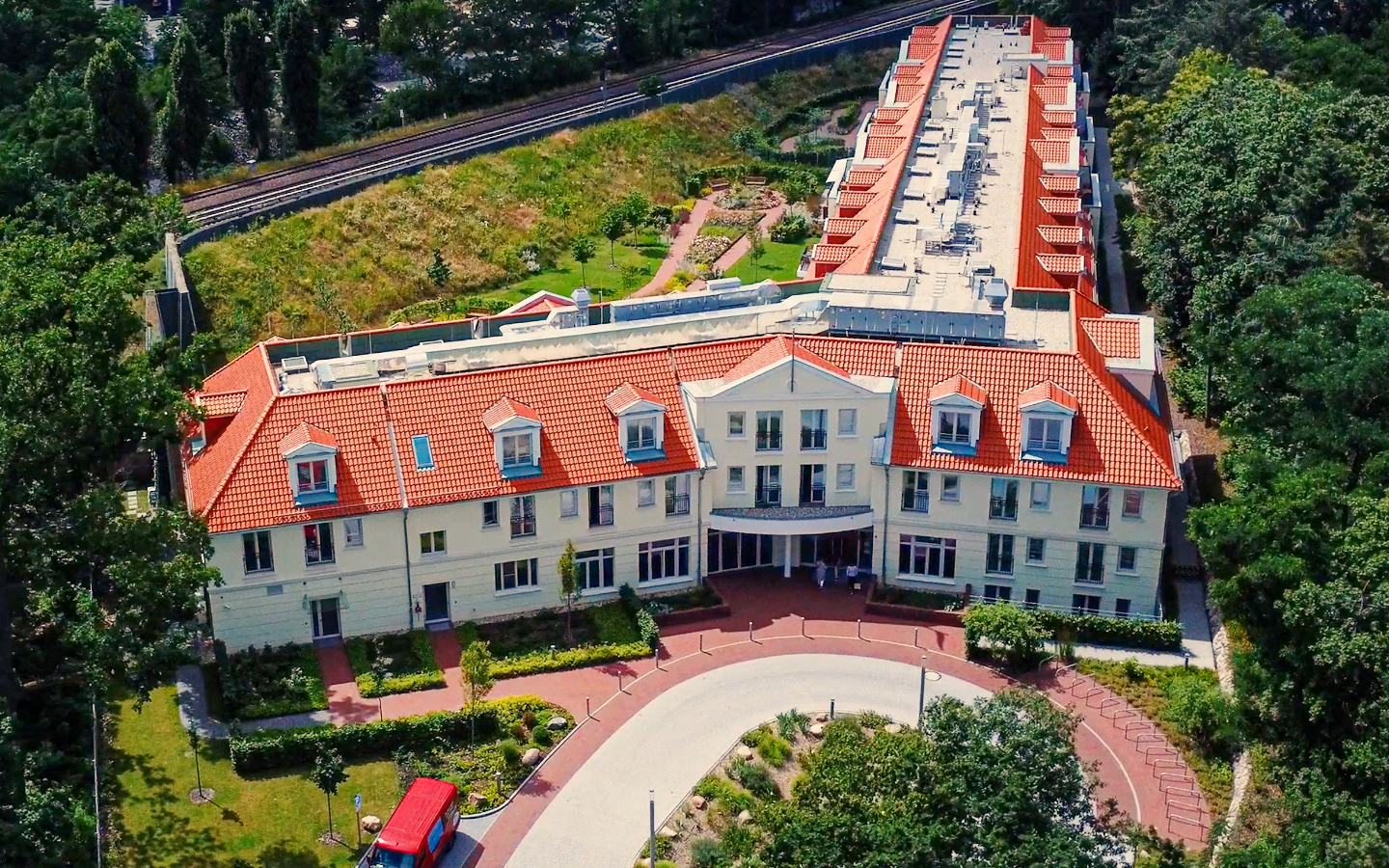
How DOMICIL and Betterspace rolled out better.energy across their care facilities whilst maintaining normal operations
| Company | DOMICIL Senioren-Residenzen Hamburg SE |
| Scope | 50 care homes in 24 towns and cities, more than 36,000 components, more than 11,000 rooms |
| Timeframe | Installation between April and December 2025 |
| Installation | In-house technical team following on-site training by Betterspace |
| First heating season | 12.8 million automatic control operations, October 2025 to April 2026 |
Brief summary of the key findings from the major project at DOMICIL:
- DOMICIL has rolled out better.energy across 50 care homes: more than 36,000 components in over 11,000 rooms.
- The roll-out took eight months instead of the planned twelve. Each month, five to seven care homes were brought online, comprising around 4,000 components.
- The installation was carried out by the facilities teams themselves following a briefing at each site by Betterspace technicians.
- During the first heating season, the system executed 12.8 million control actions: it detected open windows 3.4 million times, implemented 4.1 million night-time temperature reductions and prevented overheating 723,000 times.
- Manual intervention was required on average only once every two and a half days per room. The automated system handles day-to-day operations.
- better.energy is not a thermostat project, but an organisational and energy efficiency project. Setting it up in this way allows organisations to combine operational relief, consumption transparency and potential savings.
- The objectives have been achieved: full transparency, automated processes and the elimination of unnecessary consumption. Specific consumption figures will be available after the 2026/2027 heating season.
Thomas Komosza, Head of Construction and Building Services Engineering
At DOMICIL Seniorenresidenzen Hamburg SE, Thomas Komosza is responsible for construction and building services engineering across all facilities. He is not a technology enthusiast who jumps at every new solution. For him, energy efficiency must simultaneously serve economic viability, operational efficiency and security of supply; otherwise, it is not a valid argument. With this approach, he has rolled out better.energy company-wide across DOMICIL’s 50 sites, and the result was not an isolated technical project, but a structured decision and implementation at corporate level.
The situation at DOMICIL: rising energy costs and a lack of control
DOMICIL operates 50 care homes across Germany. These include buildings constructed in different years, each with a different technical setup and different on-site teams. What all these sites had in common were radiators that were controlled manually. There was no consistent overview of what was being consumed, where, and in what quantities. As long as energy prices remained stable, this was manageable. However, as energy costs became more volatile and began to rise, this turned into a problem.
The previous approach was no longer sufficient. Thomas Komosza describes the situation precisely: “The trigger was a combination of significantly higher energy costs, increasing price volatility and the strategic aim not only to record energy consumption centrally, but also to manage it actively across all sites.” One condition was clear from the outset: savings must not be made at the expense of the residents.

In the care sector, this is not a matter for negotiation, but a fundamental professional and ethical requirement. The aim was to achieve transparency regarding energy consumption at the level of individual rooms and entire buildings, to eliminate wasteful consumption caused by overheated rooms or windows left open continuously, and to significantly reduce the need for manual adjustments by care staff and building services technicians. Instead of 50 different procedures, a uniform standard should apply.
How better.energy supports DOMICIL
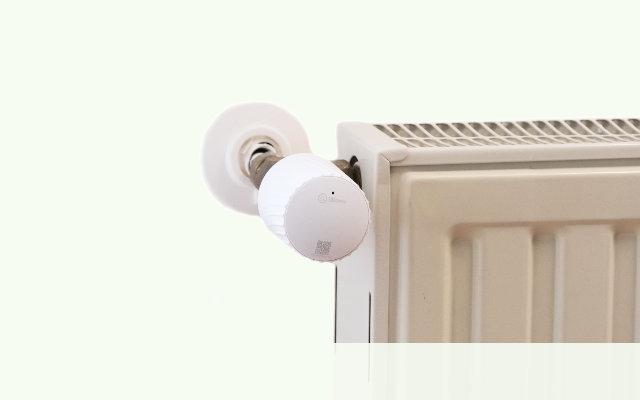
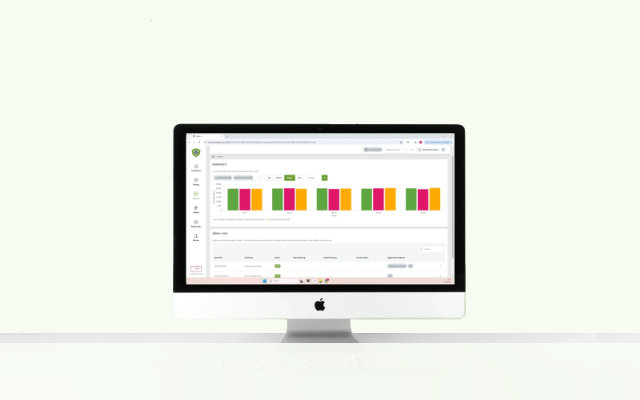
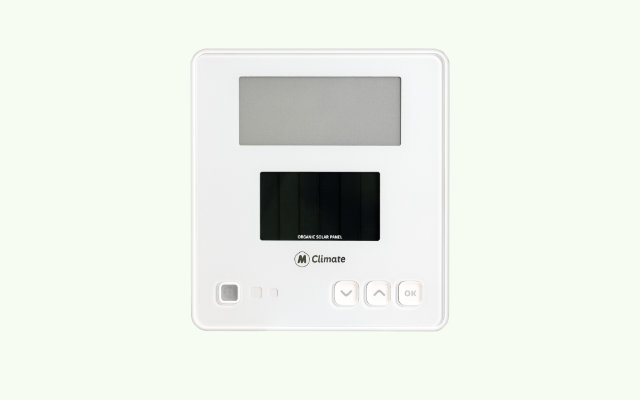
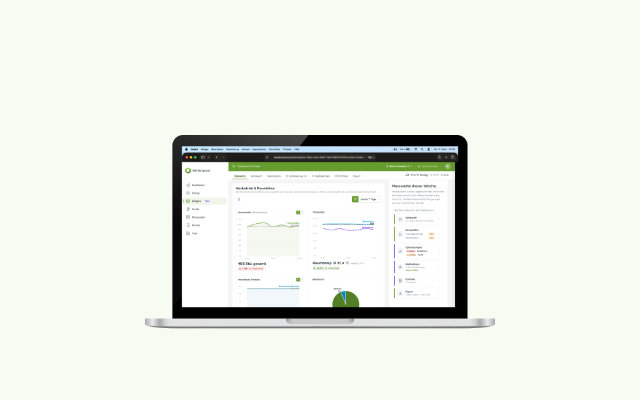
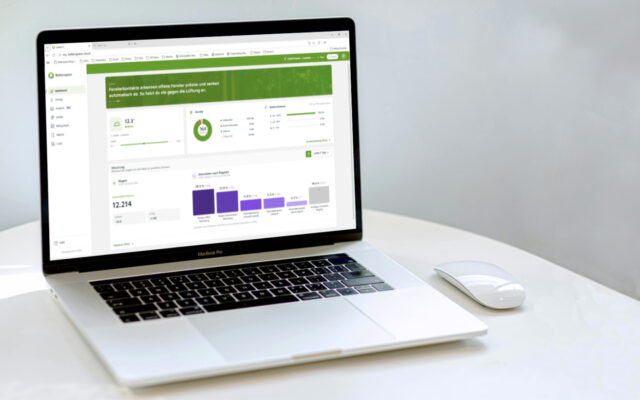
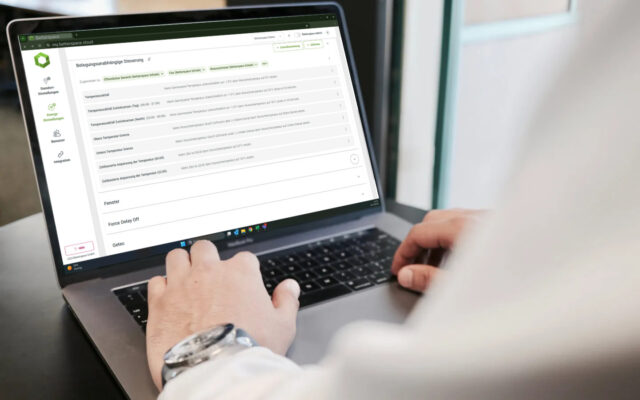
The better.energy software platform automatically controls the radiators in care homes. In each room, a wireless thermostat replaces the existing thermostatic head; window contacts report when windows are open; and gateways connect everything to the cloud via LoRaWAN. This is where the control sets come into play: setpoints for each room type, night-time temperature reduction, detection of open windows, upper and lower temperature limits, and automatic resetting of manual temperature settings. At DOMICIL, 25 group-wide standard control sets apply, from residents’ rooms to the stairwells, supplemented by individual adjustments for specific rooms. The building services team can view all rooms on a single dashboard.
The decision: Why better.energy and why Betterspace?
During market research into digital energy and heating control solutions, Betterspace was identified as a supplier at an early stage. It was not a single feature that tipped the balance, but rather the combination of hardware, software, project management and energy transparency all from a single source, coupled with an operator-focused approach that was clearly not designed for new builds and ideal conditions, but for existing buildings and day-to-day operations.
„The decisive factor was not so much a single criterion with Betterspace, but rather the robust combination of technology, project management and cost-effectiveness.“
– Thomas Komosza, Head of Construction and Building Services at DOMICIL Seniorenresidenzen
According to Komosza, the initial consultancy phase was technically effective and practical. After all, whether a roll-out across 50 sites can be successfully implemented whilst operations continue depends on everything that happens between placing the order and having a functioning system: radio network planning, delivery, training and fine-tuning. Added to this was consultancy that was technically and operationally driven, rather than purely sales-oriented.
The roll-out model: first the pilot, then all premises
From the outset, the energy efficiency project was not planned as a one-off initiative. The aim was a full-scale roll-out of the smart radiator control system across all facilities. The pilot in Hamburg-Jenfeld served to validate the operational processes before they were rolled out to almost 50 sites: radio signal strength measurements, gateway positioning, training for building services staff, and assigning devices to rooms. Following the pilot project, the standards for the roll-out were established. In March 2025, the 49 additional sites were commissioned.
„Equipping 50 sites in a single phase only works with a standardised approach. We didn’t reinvent the wheel for every building; instead, we planned the whole thing properly once and then rolled it out 50 times. The technology is manageable; it’s the project organisation that determines speed and quality.“
– Thomas Komosza, Head of Construction and Building Services at DOMICIL Seniorenresidenzen
Successful roll-out in 8 months instead of 12
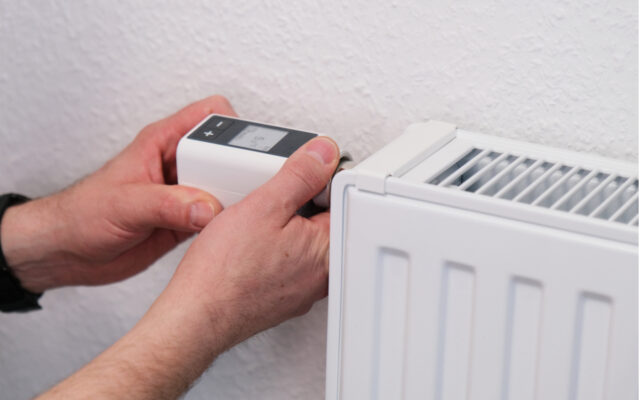
The plan was to complete the project within twelve months – an ambitious but realistic timeframe. In fact, the first site went live on 15 April 2025, and the last on 8 December 2025. Five to seven care homes went live each month, averaging around 4,000 components, with figures ranging from around 5,000 to 5,650 during the peak months of June, July, August and November. The 50 sites are located in 24 towns and cities and nine federal states, stretching from the Heide to Kempten.
The largest care home, the DOMICIL Kirchhofallee care home in Kiel, received 1,037 thermostats, 908 window contacts and 16 gateways in a single day in July 2025. Two further sites went live in the same week. “Of course, with a project of this scale, not everything goes 100 per cent smoothly. There were delays relating to site coordination, wireless and network issues, and the availability of building services. However, thanks to close coordination between the project teams, these were always resolved at short notice,” said Thomas Komosza.
Installation using the facility’s own building services
A resident’s room is not a hotel room or an office. It is occupied round the clock. There is no time slot between check-out and check-in, or between the end of the working day and the start of the next. External technicians entering the room require a clear protocol. Betterspace is familiar with these conditions from other care projects. The DOMICIL-specific procedures, access regulations and time slots were jointly defined at the start of the project and incorporated into the installation planning.
„DOMICIL had a clear requirement: to fit out all the homes one after the other, whilst care services were ongoing, using the homes’ own building services. Our task was to make this feasible to plan. For each site, we mapped out the radio coverage area to determine the optimal gateway placement and briefed the in-house technicians on site. From then on, the installation was carried out within the homes themselves.“
– Mischa Böhme, Key Account Manager, Betterspace
Before each installation, Betterspace carried out a survey of the LoRaWAN radio field to determine the ideal gateway placement. This meant that structural obstacles, such as thick walls or unsuitable ceiling structures, were identified before the replacement took place, rather than only during the roll-out. At the start of the project, a Betterspace technician visited each care home for a day, installed the first thermostats alongside the in-house technician and explained how the devices were assigned within the system. The in-house technical team then replaced the remaining devices independently. This was highly beneficial for both the residents and the care home, as it meant no external contractors were required in each resident’s room and disruption to day-to-day care was kept to a minimum.
At the same time, a Wi-Fi upgrade and the introduction of the MEDIFOX care software were also taking place in the same buildings. Overall coordination across all trades was managed centrally by the head office in Hamburg.
What was installed at DOMICIL
| Component | Quantity |
|---|---|
| Radiator thermostats with display (E-TRV C by DNT) | around 19.700 |
| Radiator thermostats without display (corridors) (E-TRV by DNT) | around 1.600 |
| Window contacts | around 14.500 |
| LoRaWAN gateways | around 350 |
| Total (50 sites including pilot) | more than 36.000 |
For T. Komosza, there was a moment when it became clear that choosing Betterspace as a project partner had been the right decision: “When I saw during the initial installations that the roll-out plan was working in our existing buildings, even though the conditions differed at each site, it was clear to me: this is the right fit.”
What the platform managed during the first heating season
Specific consumption figures will be available following the first fully automated heating period in 2026/2027. What is already available is the number of interventions carried out by the system itself. Between October 2025 and April 2026, better.energy executed 12.8 million control actions across the 50 sites, amounting to around 60,000 interventions per day.
| Rule execution | Number |
|---|---|
| Night-time temperature reduction carried out | 4.111.000 |
| Open window detected, radiator turned down | 3.366.000 |
| Window closed again, heating resumed | 3.366.000 |
| Manual adjustment reset to setpoint | 913.000 |
| Upper temperature limit maintained | 723.000 |
| Other | 310.000 |
| Total, 50 sites, October 2025 to April 2026 | 12.759.000 |
The system detected an open window 3.4 million times and turned down the radiators instead of heating against the cold air. With around 14,500 window contacts, that works out at just over one ventilation event per window per day. 4.1 million night-time temperature reductions correspond almost exactly to the 19,700 display thermostats, every night. The upper temperature limit prevented overheating 723,000 times.
he 913,000 manual temperature adjustments, across more than 11,000 rooms and 212 days, average 0.4 per room per day. In a care home with residents, relatives and staff, therefore, a thermostat was adjusted only once every two and a half days. A manual adjustment is possible at any time, but was not frequently required.
Result: The targets have been met
DOMICIL now has a clear overview of more than 11,000 rooms and areas across all its sites. Wasteful energy consumption caused by overheated rooms or windows left open permanently is automatically prevented, rather than going unnoticed and leading to unnecessary heat consumption. The constant need for manual adjustments by care staff and building services personnel has been reduced to a minimum. A uniform standard applies across all 50 facilities, with individual settings available for each resident. And comfort has been maintained: the ability to customise settings for each room is part of the system.
„More than 36,000 components across 50 sites in a major roll-out, running in parallel with two other large-scale IT projects at DOMICIL. This is not a question of technology, but of logistics and coordination. The fact that DOMICIL managed this using its own building services team, combined with our on-site training, shows just how well the coordination worked.“
– Benjamin Köhler, Managing Director, Betterspace

Lessons learnt for similar projects
Thomas Komosza’s conclusion: The technical aspects can be resolved; project organisation determines the pace and quality. He has identified three key points for future projects: a binding interface matrix when several projects are running in parallel; a site-specific database before the roll-out begins; and an even tighter schedule and resource plan, as internal capacity is the bottleneck.
Operators facing a similar task should not view the project as simply replacing thermostats, but as an organisational and energy efficiency project. The DOMICIL project demonstrates that a roll-out of this scale can be successfully implemented whilst care services continue to operate, and using the facility’s existing building services.
„Betterspace delivers not just a technical radiator control system, but a practical efficiency project for operators. The solution creates transparency, reduces the need for operational adjustments and supports a robust energy and CO₂ strategy.”
– Thomas Komosza, Head of Construction and Building Services, DOMICIL Seniorenresidenzen
If, as the operator of one or more care homes, you are facing a similar decision, the DOMICIL project provides a concrete roadmap. Not as a blueprint that can be applied one-to-one, but as proof that such a roll-out is feasible whilst care services continue to operate, even with limited in-house technical resources.
Would you like to find out more?
Sources and further information:
- Interview with Thomas Komosza, Head of Construction and Building Services, DOMICIL Seniorenresidenzen Hamburg SE
- better.energy: the smart radiator control system from Betterspace